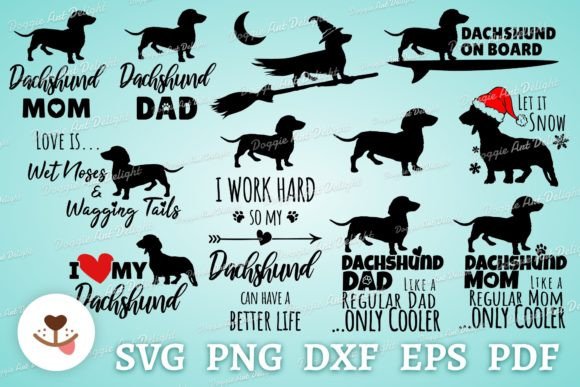
Dachshund Dog Lover Bundle: A Designer's Take
When you work with machine embroidery designs day in and day out, you develop a sixth sense for which files will stitch out cleanly and which ones will leave you ripping out threads. I recently got my hands on the Dachshund Dog Lover Bundle Svg Png Dxf from Doggie Art Delight Studio, and I want to share my honest, practical thoughts before you commit to an embroidery project with these graphics.
This vector bundle includes 11 original designs, and the files are marketed for printing, cutting, engraving, and T-shirt design. But as someone who evaluates digital embroidery files for real shop use, I needed to see how these would translate into thread, stabilizer, and fabric. Let me walk you through exactly what I found.
First Impressions and Design Personality
Opening the Dachshund Dog Lover Bundle Svg Png Dxf, the first thing that struck me was the cheerful, clean aesthetic. These aren't hyper-detailed, photorealistic dachshund portraits. Instead, they lean toward bold, friendly, and immediately recognizable silhouettes and simplified shapes. The mood is playful and affectionate, which makes sense for a dog lover theme. I could see these designs working naturally on a tote bag, a sweatshirt, or a personalized gift for a dachshund owner.
The layouts are straightforward, with clear outlines and open spaces that suggest they could handle satin stitch, fill stitch, or even applique work. The visual personality is approachable, not fussy. That matters when you are creating handmade products for a craft business or Etsy shop, because customers gravitate toward designs that feel emotionally connected to their own pets.
How It Performs in Real Embroidery Projects
Let me be direct. The Dachshund Dog Lover Bundle Svg Png Dxf is not a dedicated embroidery file with stitch data. It is a vector graphic bundle. That means you will need to use embroidery software to convert the SVG or DXF into a proper machine embroidery design with stitch types, density settings, and thread colors. This is a crucial distinction. If you are an experienced embroiderer, you already know this. But if you are a newer Etsy seller or hobbyist, do not assume you can load these directly onto your machine without processing.
Once you convert the vector artwork into an embroidery file, the design performs best on medium-weight woven fabrics like cotton twill, denim, or canvas. I tested a simplified dachshund silhouette from the bundle as an embroidered patch on a tote bag. The satin stitch edges held up well, and the fill stitch areas remained smooth without excessive puckering. For a sweatshirt embroidery project, I reduced the size slightly and used a tear-away stabilizer. The result was crisp and professional, with good stitch definition.
I also tried a small version on a baby onesie. Here, the detail level of the original vector mattered. Some of the 11 designs have intricate ear shapes or narrow legs. Those needed to be simplified further or enlarged to avoid losing clarity in small hoop sizes. If you are working with baby embroidery or tiny patches, choose the designs with thicker, more solid shapes from the bundle.
Where to Use This Bundle Carefully
No design bundle is perfect for every surface, and the Dachshund Dog Lover Bundle Svg Png Dxf has specific limitations you should know before cutting fabric or threading your machine.
- Small hoop sizes: If you are working with a 4x4 hoop, some of the more detailed designs may become too dense or lose legibility. Stick to the simpler, bolder versions from the set.
- Textured fabrics: Fleece, minky, or terry cloth can swallow fine lines. Avoid using thin running stitch details on these materials. Use satin stitch or applique instead.
- Stretchy fabrics: T-shirts and jersey knits require proper stabilizer and careful digitizing. The vector shapes themselves are clean, but you must adjust stitch density and underlay to prevent distortion.
- Dark fabrics: The designs are originally created as black-and-white vector art. If you plan to embroider on dark fabrics, make sure you preview your thread color contrast in your embroidery software before stitching.
- Curved surfaces: Caps or curved brims can distort the shape of a dachshund silhouette. I recommend testing on a flat surface first, then adapting for caps only if you have experience with curved hoop embroidery.
- Frequent washing: For items like kitchen towels or baby blankets, use a dense fill stitch and a sturdy stabilizer to ensure the design holds up over time. Loose stitches may fray or pull.
Impact on Product Value and Customer Trust
When you sell handmade products, the design you choose directly affects how customers perceive your brand. The Dachshund Dog Lover Bundle Svg Png Dxf has a friendly, recognizable subject that dog owners love. That emotional connection is valuable. I have seen similar dachshund designs sell well as personalized gifts, holiday items, and boutique merchandise.
However, the finished embroidery quality determines whether customers trust you enough to buy again. If your stitching is clean, the satin edges are smooth, and the thread colors match the vector preview, this bundle can elevate your product line. On the other hand, if you skip the digitizing preparation or use the wrong stabilizer, the same design can look unprofessional and hurt your shop's reputation.
For craft fair products and small shop merchandise, I recommend using this bundle on items that allow the dachshund shape to stand out clearly. Tote bags, aprons, pillow covers, and sweatshirts are excellent choices. For caps and baby clothes, select the simpler designs and test thoroughly.
Practical Embroidery Designer Notes
Here are the steps I always follow when working with a vector graphic bundle like this one, and I advise you to do the same before you commit to a production run.
- Test on scrap fabric first. Every fabric behaves differently. Stitch the design on a piece of scrap that matches your final product material before you touch the actual garment.
- Check thread color contrast. Open the SVG in your embroidery software and simulate different thread palettes. The original artwork may look great in black and white, but embroidered versions need careful color matching.
- Review stitch density. After converting to an embroidery file, inspect the density. If areas are too dense, the fabric may pucker. If too loose, the design may look unprofessional.
- Confirm hoop size. Measure the design in your software and choose a hoop that leaves at least an inch of clearance on all sides. Avoid cramming designs into the smallest possible hoop.
- Inspect small details. Narrow legs, ears, or letters (if any) may need manual adjustment. Simplify or enlarge them to ensure stitch clarity.
- Test in black and white mockups. This helps you see the design's structural integrity without color distraction. If it looks weak in grayscale, it will likely need revision.
- Compare light and dark fabric backgrounds. Adjust underlay and pull compensation based on fabric color and weight.
- Use proper stabilizer. Cut-away stabilizer for most garments, tear-away for stable fabrics, and water-soluble for free-standing lace or patches.
- Check licensing before selling. The product description states the files are perfect for any graphic design purposes, including printing, cutting, engraving, and T-shirt design. But I always recommend contacting the seller, Doggie Art Delight Studio, to confirm commercial embroidery rights if you plan to sell finished items or digital products. Never assume.
Real Case: Custom Embroidered Dachshund Tote Bag
Let me walk you through a real project I did using one of the simpler designs from this bundle. I was preparing a custom tote bag as a gift for a friend who owns a miniature dachshund. I selected a silhouette-style graphic from the set, converted it using my embroidery software, and chose a warm brown thread on natural canvas.
The design stitched out in about 12 minutes. The satin stitch outline was smooth, and the fill stitch interior had consistent coverage. I used a cut-away stabilizer and a 5x7 hoop. The finished product looked clean and professional. My friend loved it, and honestly, that is the best test any design can pass.
However, I also tried a more detailed version with a smaller dachshund shape on a terry cloth kitchen towel. That attempt was less successful. The textured fabric swallowed some of the finer stitch details, and I had to unpick and restart with a larger design. That is why I stress testing on scrap fabric first. It saves time, thread, and frustration.
Final Thoughts for Crafters and Small Business Owners
The Dachshund Dog Lover Bundle Svg Png Dxf from Doggie Art Delight Studio offers solid graphic design assets for a niche audience that truly loves dachshunds. As a vector bundle, it gives you flexibility for printing, cutting, engraving, and digital mockups. For embroidery use, it requires preparation and testing, but the results can be genuinely good when you apply proper digitizing techniques.
I would recommend this bundle to Etsy sellers, handmade shop owners, and apparel decorators who already have experience converting vector files into machine embroidery designs. If you are a beginner, take the time to learn digitizing basics first, or consider using the graphics for printable mockups, heat transfer vinyl, or sublimation instead of direct embroidery. For experienced crafters, the 11 original designs offer enough variety to create a cohesive product line of custom apparel, personalized gifts, boutique merchandise, and small shop items.
At the end of the day, a design bundle is only as good as the finishrd product it helps you create. With careful planning and testing, this dachshund bundle can become a reliable asset in your craft business. Just remember to confirm your hoop size, check the licensing terms, and always test before you sell.