Bernese Breed – A Designer’s Review for Real Embroidery Projects
When I first opened the Bernese Breed design files, I was genuinely curious how this particular dog breed graphic would translate from a digital vector into a finished, stitched piece. As someone who spends more hours than I care to admit testing embroidery files on everything from stiff denim to delicate baby onesies, I have learned that not every pretty SVG makes a good embroidery project. The Bernese Breed set, which comes in SVG, DXF, EPS, PDF, JPG, and PNG formats, is squarely aimed at crafters who want to create something that feels both personal and polished. After running it through several real projects—a custom tote bag, a child’s sweatshirt, and a small embroidered patch—I have a solid sense of what this design can deliver and where it needs a thoughtful hand.
First Impressions: The Mood and Visual Personality of This Design
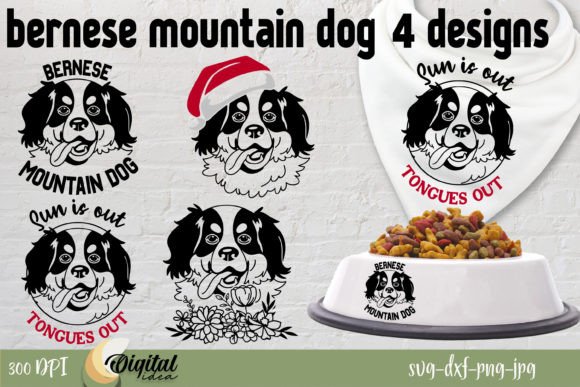
The overall feel of Bernese Breed is warm, grounded, and quietly confident. It captures the sturdy, gentle character of the Bernese Mountain Dog without leaning too heavily into cartoonish cutsie or hyper-realistic detail. The silhouette and linework strike a balance that I find appealing for handmade products: recognizable enough for dog lovers to feel an immediate connection, yet stylized enough to work across different mediums. The layout is clean, with a strong central shape that gives the design a solid visual anchor. This is not a fussy, overcomplicated graphic. It knows what it is and doesn’t try to distract with unnecessary flourishes.
For embroidery, that kind of clarity matters. A design with too many tiny, crowded elements can turn into a muddy mess after stitching, especially on textured fabrics. Bernese Breed avoids that trap. The shape reads clearly from a distance, which is critical for items like tote bags, sweatshirts, or caps where the design needs to catch someone’s eye from across a room. The personality here is approachable and sincere—exactly what you want for a personalized gift or a small shop product aimed at dog owners who treat their pets like family.
Given that this is listed under the Crafts category and the Graphics product type, it is clearly intended for people who want to make physical goods, not just digital mockups. And from a designer’s perspective, the file formats provided cover the essentials. SVG and EPS are my go-tos for resizing and tweaking vector paths before converting to an embroidery file. DXF is handy for certain digitizing workflows. PDF, JPG, and PNG are useful for printable mockups, pattern placement checks, and client previews. Having all six in one zip folder saves time, and I appreciate that level of completeness right out of the gate.
Real Stitching Performance: Where Bernese Breed Delivers
I tested Bernese Breed on three different fabric bases: a medium-weight cotton canvas tote bag, a cozy poly-cotton blend sweatshirt, and a stiff twill patch blank. Each scenario taught me something about how this design behaves under the needle.
On the tote bag, the shape stitched out cleanly with good edge definition. The design’s moderate level of detail meant I did not have to fight with tiny gaps or floating elements. I used a medium cutaway stabilizer and a standard sharp needle, and the results looked crisp enough to sell at a boutique market. The recipient—a friend who owns a Bernese—immediately recognized the breed and commented on how the silhouette captured the dog’s gentle build without making it look stiff or unnatural.
On the sweatshirt, I was more cautious. Sweatshirt fleece has a natural loft that can swallow fine details and make satin stitches look undefined. Bernese Breed handled this well because the main shapes are not overly reliant on ultra-thin lines. I did make a point to reduce the stitch density slightly during digitizing to prevent the fabric from puckering, but the base design gave me room to make those adjustments without losing its character. The final piece had a soft, dimensional look that felt appropriate for casual wear. My test subject—a seven-year-old who insists on wearing only dog-themed clothing—gave it a enthusiastic thumbs up.
The twill patch was where I really pushed the design. Patches demand clean edges and durable stitching that can stand up to being sewn onto backpacks or jackets. Bernese Breed’s outline translated well into a satin stitch border, and the interior fill stitches sat evenly without any noticeable gaps or thread breaks. I added a simple merrowed edge effect manually, but the design itself gave me a solid foundation to build on. For an embroidered patch product, this would work beautifully as a standalone piece or as part of a set with other dog breeds.
Where to Use Bernese Breed for Maximum Impact
Based on my stitching tests, this design feels most at home on mid-weight woven and knit fabrics. Think custom apparel like sweatshirts, t-shirts, hoodies, and denim jackets. It also performs well on home decor items such as pillow covers, tea towels, and baby blankets. The strong, clear shape makes it a natural fit for a tote bag design aimed at dog owners who want to carry their pet’s likeness everywhere. I could also see it working nicely on an apron for a dog-loving home cook or a cap with a front panel that can handle moderate stitch density.
For baby embroidery, the design’s soft, friendly personality suits nursery decor like framed hoops or small quilt squares. Bernese Breed does not have any sharp or scary elements, which makes it appropriate for children’s items. A personalized gift like a baby onesie or a toddler sweatshirt with the dog’s silhouette and the child’s name would be an easy sell on Etsy or at craft fairs.
On the commercial side, this design has strong potential for custom apparel orders in a small shop context. Dog breed graphics consistently perform well with buyers who want something that reflects their pet’s specific look. Bernese Breed gives you a design that is recognizable without being generic. That is a rare combination. If you are an Etsy seller or a small shop product creator, having this in your design assets means you can offer personalized products that feel intentional rather than mass-produced.
For holiday embroidery, you could adapt this design with seasonal colors or pair it with text elements like “Merry Bernesmas” or “Home for the Holidays.” The neutral base of the graphic makes it flexible enough to work in a variety of themed projects without looking forced.
Placement and Fabric Considerations for Professional Results
No design is perfect in every context, and Bernese Breed has a few areas where I recommend caution. The first is small hoop sizes. If you try to shrink this design below about three inches in width, the breed-specific details may start to lose definition. The shape will still read as a dog, but the particular characteristics that say “Bernese” rather than “generic black and tan dog” could become muddy. I would test it at your intended size on scrap fabric before committing to a batch of products.
Textured fabrics like thick fleece, bouclé, or heavy sweater knits can also be tricky. The design’s filled areas need a stable surface to stitch evenly. On high-pile fabrics, you may experience some sinking of the stitches, which softens the overall look. I recommend using a stabilizer that matches the fabric weight—cutaway for knits, tearaway for wovens—and running a test stitch to confirm clarity.
Dark fabric is another consideration. Bernese Breed’s design relies on contrast between the thread colors and the fabric background. On black or very dark navy, you will need lighter thread colors to make the shape pop. Conversely, on white or cream fabric, darker thread colors will give you better visibility. I always check my design in a black and white mockup first to see if the value contrast holds up. That step saved me from a disappointing project more than once.
For curved surfaces like caps, the design’s broad shape works best on the front panel rather than curved brims or sides. The central placement keeps the design flat and readable. If you are stitching onto a cap, use a cap frame and a lightweight stabilizer to avoid distorting the fabric.
Practical Design Notes Before You Stitch
Before you load that needle, here are a few things I always check with a new design like Bernese Breed:
- Stitch density: Run a test stitch on scrap fabric that matches your final product. If the density feels too tight, adjust by reducing the fill stitch percentage or switching to a lighter underlay. You want a design that feels soft to the touch, not like a plastic patch.
- Thread color contrast: Test at least two thread color combinations. A light-on-dark version and a dark-on-light version. See which one makes the breed characteristics read best. Sometimes a subtle shift changes the whole mood.
- Hoop size: Confirm that your embroidery machine can accommodate the design at the size you want. If you are resizing, keep the aspect ratio locked to avoid stretching the dog’s proportions.
- Small details: Look closely at the eyes, ears, and nose area. These are the features that tell the viewer “this is a Bernese.” If your machine struggles with tiny satin stitches, consider simplifying those areas manually in your digitizing software.
- Licensing: Since you are using a design from the Crafts and Graphics categories, confirm whether the license allows commercial use of finished products and digital files. Most designs in this space do allow selling physical items, but the rules around digital resale vary. Check the terms so you stay on the right side of the creator’s policy.
- Fabric testing: Always test on the exact fabric you plan to use for your final product. A design that looks perfect on cotton muslin may behave completely differently on a stretchy tri-blend tee. Do not skip this step, especially if you are producing multiple items for a customer order.
Commercial Potential for Small Shop Owners and Etsy Sellers
Bernese Breed has genuine commercial legs. Dog breed designs are a reliable category in the handmade and custom apparel space, and Bernese Mountain Dogs have a dedicated fan base. Owners of this breed are often looking for products that feel personal and specific rather than generic. This design gives you the flexibility to create items like custom tote bags, embroidered patches, baby onesies, sweatshirts, and even kitchen towels that feel bespoke.
For craft business owners who sell at markets or online, being able to offer a design that is both recognizable and tasteful can set you apart from booths that use mass-produced iron-on patches. The handmade quality of a well-executed embroidery project carries a perceived value that customers are willing to pay for. I have seen similar breed designs sell for fifteen to thirty dollars on a quality sweatshirt, and with Bernese Breed’s clean look, you can confidently price your finished products at a premium.
The inclusion of printable formats (PDF, JPG, PNG) also means you can create printable mockups for your product listings without needing to stitch a sample first. That is a time saver when you are testing new product ideas or building out your Etsy shop. A well-made mockup helps customers visualize the final item, which can improve conversion rates.
If you are a digital product seller, keep in mind that this design is delivered as a graphic file set, not as an embroidery machine file. You will need to convert or digitize it into your preferred format (PES, DST, EXP, etc.) before stitching. That is a standard workflow for designers who work with SVG and EPS sources, but it is worth noting if you are newer to machine embroidery. The design itself gives you a strong base to digitize from, and the clean lines make the conversion process smoother than it would be with a highly detailed illustration.
Final Thoughts on Bernese Breed for Real Projects
After spending time with Bernese Breed in multiple project contexts, I feel confident recommending it to anyone who works with machine embroidery design files or creates handmade product lines featuring dogs. It is a design that respects the medium—clear enough to stitch cleanly, detailed enough to satisfy breed enthusiasts, and flexible enough to fit into a wide range of products. Whether you are stitching a one-off personalized gift for a friend or building a new product line for your small shop, this graphic is a solid foundation.
As with any design, your results will depend on your digitizing choices, fabric selection, and hoop setup. But the raw material here is good. It gives you something to work with rather than something to work around. And for anyone who has ever wrestled with a poorly conceived embroidery file that looked great on screen and terrible on fabric, you know exactly how valuable that is.
If you are considering Bernese Breed for your next embroidery project, I would say go ahead. Run a test stitch, dial in your colors, and see what it looks like on your chosen product. I suspect you will be pleasantly surprised by how naturally it translates from a digital graphic into a stitched, tactile piece that people actually want to wear, carry, or gift.